9 November 2026
Verifying delayed mowing and wildflower margin commitments with season-long imagery
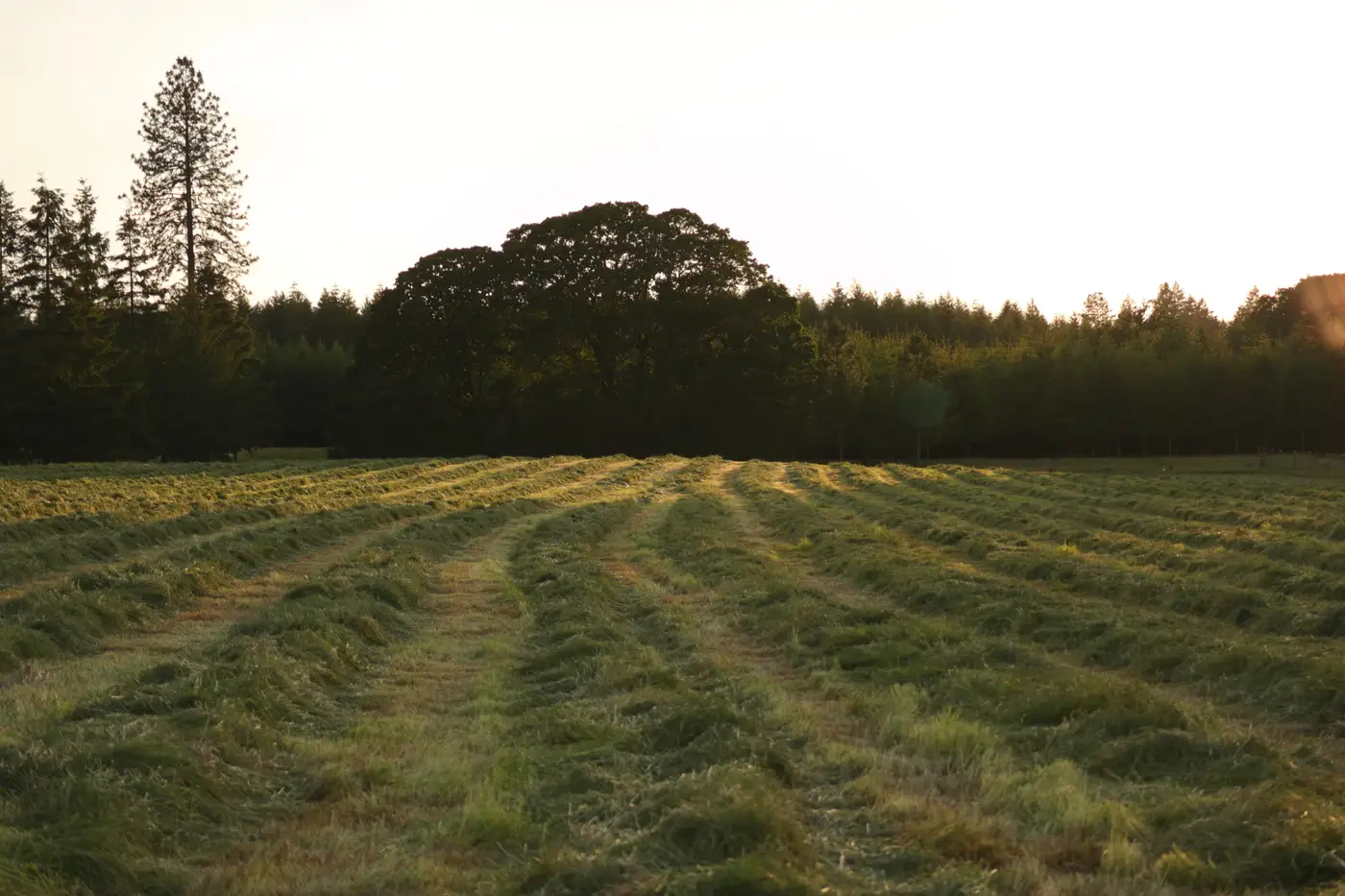
Delayed mowing and wildflower margin commitments are two of the easiest agri-environment options to write into a scheme and two of the hardest to check once the claim lands on your desk. A farmer signs up to leave a margin uncut until a set date, or to hold off topping a meadow until after seed-set, and the payment goes out on the promise that it happened. Checking that commitment means confirming what the ground did across the whole window it covers, on every claimed parcel, not just whatever an inspector happened to see on one visit.
What a mowing or margin commitment actually asks you to prove
A delayed mowing commitment has a start condition (don't cut before date X) and usually an end condition too (cut by date Y, or leave until the next management step). A wildflower margin commitment adds a spatial element: the strip has to exist, at the width and location on the agreement, and it has to stay standing through the flowering window rather than getting mown, sprayed, or ploughed back into the main crop. Verifying either one means knowing the state of that specific parcel at more than one point in the season. One site visit tells you what the field looked like on the day the inspector was there. It doesn't tell you what happened the week before or the month after.
Why a single inspection date misses the breach
Most paying agencies still check these commitments through a field-inspection round covering a sample of the book, often triggered by risk scoring or a fixed percentage requirement. That catches genuine non-compliance when the timing lines up. It also lets a field cut on day 40 of a 60-day window pass clean if the inspector happens by on day 35, and it means every parcel outside the sample runs on trust. For a margin that's supposed to flower from May through July, an inspector visit in June confirms the state on that day and nothing either side of it. A farmer who cuts early and re-establishes before the visit, or who cuts late once the visit has passed, isn't caught by a sampled round. The method only ever produces one data point per parcel, on a sample of parcels, however careful the inspector is.
Reading the season instead of the day
Season-long satellite monitoring works differently because it isn't trying to catch the field on the right day. A wide-swath multispectral pass covers the claim area repeatedly across the growing season, so the record for a parcel is a sequence, not a snapshot. For a delayed mowing claim, that sequence shows whether the vegetation signal holds steady through the commitment window or drops sharply at a point that falls inside it, the kind of change a cut produces and standing growth doesn't. For a wildflower margin, the same sequence shows whether the strip stays in place at all, rather than being topped, sprayed off, or absorbed back into the cropped area partway through. At the ground sample distance this method works at, 10 to 30 metres, it won't tell you which species are flowering. It will tell you whether the parcel kept growing undisturbed through the window the commitment specifies, or whether something changed on it, and roughly when.
Turning that into a verification file
What an auditor needs is a parcel-level call: compliant, flagged, or needs a visit. That's what a flag list is for, a parcel-by-parcel readout built from the season's passes, delivered as a map layer and a CSV you can join against the claims register. Parcels that hold a clean signal through the commitment window clear without taking up an inspector's day. Parcels showing a disturbance inside the window move to the top of the follow-up list, with the dates attached so the field visit knows what it's checking before anyone drives out. The sample doesn't disappear, but it stops being the only check. Every claimed parcel gets looked at for the season it was claimed, not just the ones the risk model picked.
If delayed mowing and wildflower margin claims make up a chunk of your scheme book, Subsidy Monitoring is built around exactly this problem: checking what every claimed parcel did across the season, not just what a sampled visit happened to catch. Get in touch if you want to see what a flag list looks like against your own claims register.